


Chain of Responsibility: Why Directors Cannot Leave Safety at the Gate
Updated: Jul 15
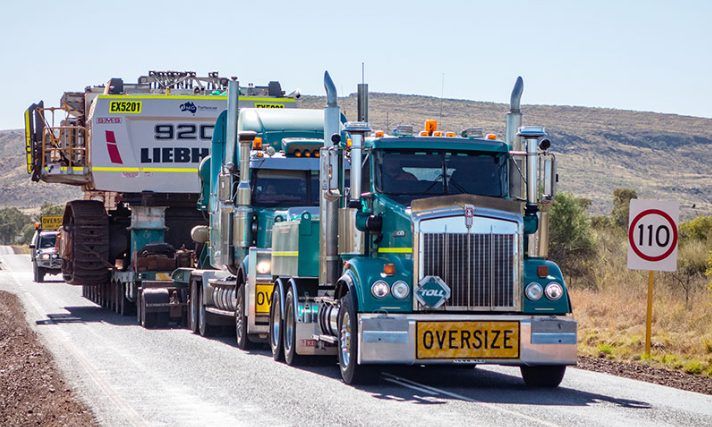
The Heavy Vehicle National Law (HVNL) has fundamentally changed the way heavy vehicle safety is regulated in Australia. Gone are the days when legal responsibility for a road transport incident rested solely with the driver behind the wheel. Today, every party in the transport supply chain ( referred to as the chain of responsibility) has a role to play in ensuring safety, and where that responsibility is ignored, significant penalties can follow.
One of the most important reforms introduced under the HVNL is the concept of the Primary Duty and the associated Chain of Responsibility (CoR) provisions. These laws recognise a simple reality: many of the decisions that affect heavy vehicle safety are made long before a driver starts the engine.
The consequences of failing to meet these obligations can be devastating.
Understanding the Primary Duty
Under section 26C of the HVNL, each party in the Chain of Responsibility must, so far as is reasonably practicable, ensure the safety of their transport activities. This obligation extends beyond drivers and transport operators and includes directors, employers, loading managers, consignors, consignees and schedulers.
The law imposes a positive duty to identify, assess and manage risks associated with transport activities. Importantly, parties cannot simply delegate responsibility and assume others will manage the risks.
The question asked by a court is not whether a person intended for an incident to occur. Rather, the question is whether they took all reasonably practicable steps to prevent foreseeable risks from arising.
A Tragic Example
Consider a scenario where a company manufactures and distributes large steel wire rolls. A loading manager supervises the loading of a heavy vehicle at the company's premises. The heavy vehicle is loaded with the rolls and the vehicle departs.
Almost two days later, while travelling hundreds of kilometres away, several rolls become dislodged from the trailer. The load shifts, rolls from the vehicle and collides with an oncoming passenger car. The driver of the light vehicle is killed.
Traditionally, many would assume that responsibility lies solely with the driver or transport operator because the incident occurred long after the vehicle left the loading site.
The HVNL takes a different view.
Investigators would examine not only the conduct of the driver but also the actions of every party involved in preparing, loading and dispatching the freight. Questions would include:
Was the load appropriately restrained?
Were loading procedures adequate and implemented ?
Had risk assessments been conducted?
Were employees trained in load restraint requirements?
Were safe systems of work implemented and monitored?
Did senior management understand and manage the risks associated with transporting the product?
If deficiencies existed at the loading stage, the fact that the vehicle travelled for two days before the incident may not absolve those responsible and may be prosecuted for breach of primary duty offences which are the most serious under the HVNL.
Responsibility Does Not End When the Truck Leaves
One of the most common misconceptions regarding Chain of Responsibility obligations is that liability ends once a vehicle departs a depot or loading facility. The reality is quite different.
The HVNL focuses on the transport activity as a whole. Courts will often look at the decisions, systems and controls that existed before the vehicle entered the road network. If a loading manager authorises a load that does not comply with load restraint requirements, or if a director fails to ensure appropriate safety systems exist, liability may arise even though the incident occurs much later and in a different location.
This reflects the risk based nature of the legislation. The law seeks to address the causes of risk rather than merely identifying who happened to be present when an incident occurred.
The Role of Directors and Executive Officers
Directors and senior executives cannot assume that transport safety is solely an operational matter.
Under the executive officer provisions of the HVNL, senior leaders are expected to exercise due diligence to ensure their organisation complies with its safety obligations. This includes taking reasonable steps to:
Understand transport safety risks.
Ensure appropriate resources are available.
Verify that safety systems are operating effectively.
Monitor compliance and respond to identified deficiencies.
Courts increasingly expect directors to actively engage with safety management rather than simply relying on reports from operational staff.
Where a fatality occurs and systemic failures are identified, investigators will often scrutinise corporate governance arrangements, risk management systems and executive oversight.
Lessons for Industry
The transport industry operates in an environment where commercial pressures are ever-present. Delivery deadlines, production schedules and customer expectations can sometimes create competing priorities.
However, the HVNL makes it clear that safety cannot be compromised for commercial convenience.
Businesses involved in transport activities should regularly review their systems and ask:
Are our loading procedures documented and consistently applied?
Do our staff receive adequate training?
Have we identified foreseeable transport risks?
Are safety controls monitored and audited?
Can we demonstrate that we have taken all reasonably practicable steps to ensure safety?
These questions are not merely administrative exercises. In the event of a serious incident, the answers may determine whether an organisation and its officers face prosecution.
Conclusion
The Heavy Vehicle National Law represents a significant shift in the regulation of transport safety. By extending responsibility throughout the Chain of Responsibility, the legislation recognises that road safety outcomes are influenced by decisions made at every stage of the transport task.
For directors, managers and loading personnel, the message is clear: responsibility does not end when the truck leaves the yard. If decisions made days earlier contribute to a fatal incident, those involved may still be held accountable.
The most effective defence to a Chain of Responsibility prosecution is not found in a courtroom. It is found in robust safety systems, , ongoing training and a genuine commitment to managing risk before tragedy occurs.
As regulators continue to focus on Primary Duty investigations, organisations that view safety as a shared responsibility rather than a compliance exercise will be best placed to protect both the public and themselves.
Authored by Kristy Speirs of Acorn Lawyers
Click to connect

Kristy Speirs is Special Counsel at Acorn Lawyers and leads the firm's Criminal Law and Regulatory Prosecutions practice.
With more than 20 years' experience in law enforcement, prosecutions and regulatory compliance, Kristy has held senior legal and prosecutorial roles with the NSW Police Force, the NSW Office of the Director of Public Prosecutions, the Australian Health Practitioner Regulation Agency (Ahpra) and Principal Prosecutor with the National Heavy Vehicle Regulator (NHVR).
Throughout her career, Kristy has prosecuted and advised on complex criminal and regulatory matters across multiple jurisdictions and has extensive advocacy experience in the Local, District and Supreme Courts. She has also provided executive-level legal advice, contributed to legislative review and reform processes, and managed high-profile investigations and prosecutions involving significant public interest considerations.
Kristy has a particular interest in Heavy Vehicle National Law, Chain of Responsibility obligations and Primary Duty prosecutions. Her experience acting for regulators provides a unique perspective on how transport incidents are investigated, how evidence is gathered and assessed, and the factors regulators consider when determining whether prosecution action should be commenced.
She holds a Master of Laws and a Master of Commerce and is passionate about promoting greater understanding of regulatory compliance and transport safety within the Australian transport industry.