


Torres Strait Islander plaintiffs claim climate negligence
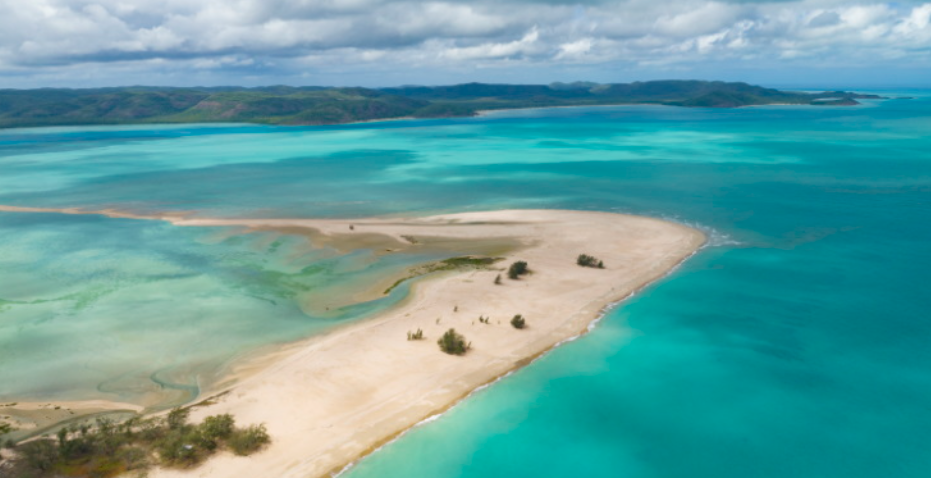
In October 2021, two Torres Strait Islander community leaders, Uncle Pabai Pabai and Uncle Paul Kabai, commenced proceedings in the Federal Court of Australia against the Commonwealth of Australia, asserting that the Commonwealth owed a duty of care to Torres Strait Islanders to protect them from the foreseeable impacts of climate change.
The plaintiffs argued that inadequate emissions reduction targets and insufficient adaptation measures breached this duty, placing communities, property, and Ailan Kastom (The cultural and traditional heritage of Torres Strait Islanders) at risk.
Background
The proceeding arose from long running concerns held by Torres Strait Islander communities about the impacts of climate change on low lying islands in the Torres Strait.
For decades, residents of islands such as Boigu and Saibai have experienced increasingly frequent inundation, coastal erosion, and damage to housing and infrastructure.
These impacts have been the subject of community advocacy, scientific reporting, and engagement with government agencies at both state and federal levels.
By the late 2010s, climate modelling and government commissioned reports had identified the Torres Strait as one of the Australian regions most exposed to sea level rise. At the same time, Australia had entered international climate commitments acknowledging the risks posed by climate change, including commitments under the Paris Agreement.
Community leaders, including Uncle Pabai Pabai and Uncle Paul Kabai, engaged in advocacy seeking stronger mitigation and adaptation measures, including infrastructure protection such as sea walls and more ambitious national emissions reduction targets. Those efforts did not result in outcomes the applicants considered adequate to protect their communities.
Against that backdrop, the dispute shifted from political advocacy to legal strategy. The applicants sought to test whether existing Australian law could impose legal responsibility on the Commonwealth for the consequences of national climate policy.
Commencement of Proceedings
In October 2021, the applicants commenced proceedings in the Federal Court of Australia against the Commonwealth. The proceeding was brought as a representative action on behalf of Torres Strait Islander communities affected by climate change impacts. The choice of forum and cause of action reflected a deliberate attempt to engage common law principles, rather than statutory or constitutional mechanisms.
The applicants framed the case in negligence. Rather than challenging the legality of a particular decision, they alleged that the Commonwealth’s overall approach to climate mitigation and adaptation involved a failure to take reasonable care to avoid foreseeable harm.
The relief sought was prospective in nature. The applicants did not seek damages for past loss. Instead, they sought declarations that the Commonwealth owed and had breached a duty of care, together with orders requiring reasonable mitigation and adaptation measures to be taken in the future.
Legal considerations
As the matter progressed, the central legal question became increasingly clear. The case did not turn on whether climate change exists, whether it causes harm, or whether Torres Strait Islander communities are particularly vulnerable. Those matters were largely uncontested.
Instead, the litigation focused on whether negligence law is capable of engaging with harm said to arise from national policy settings. The parties’ submissions concentrated on duty of care, coherence of the law, and institutional limits on judicial decision making.
Does the Commonwealth owe a common law duty of care to Torres Strait Islanders to take reasonable steps to mitigate or prevent climate change impacts?
If such a duty exists, did the Commonwealth breach that duty by setting inadequate emissions targets and failing to take reasonable adaptation steps?
Did any breach materially cause loss or damage, including loss of culture (Ailan Kastom)?
Is the common law tort of negligence an appropriate legal vehicle for claims based on governmental climate policy decisions?
Evidence and Hearing
Evidence on Australian emissions and climate science
The court heard factual evidence that Australia’s greenhouse gas emissions reduction targets for 2015, 2020 and 2021 did not reflect the best available science for keeping global warming to 1.5 °C, and that the Torres Strait Islands are being affected by climate change (e.g., sea‑level rise, coastal erosion, extreme events).
Justice Wigney acknowledged these scientific findings in his judgment, even though he held they could not form the basis of a duty of care under negligence law.
Evidence on Commonwealth’s role in setting national targets
The plaintiffs’ case specifically contended that the Commonwealth’s setting of greenhouse gas emissions reduction targets in 2015, 2020, 2021 and 2022 was insufficient and did not give proper regard to best available science.
This was central to the claim that the government owed a duty of care, even though the Court ultimately ruled that decisions about targets are a matter of “core government policy” and not justiciable in negligence.
Evidence on adaptation measures
The applicants also put forward an alternative case focusing on adaptation measures: specifically the adequacy of funding for and implementation of protective works like seawalls to protect islands such as Boigu and Saibai from climate impacts.
Evidence and submissions were made concerning the timeliness, predictability and adequacy of that adaptation response by the Commonwealth.
what the court held
In July 2025, the Federal Court delivered judgment dismissing the applicants’ claims.
The Court accepted that climate change poses serious and ongoing risks to Torres Strait Islander communities. However, it concluded that the common law of negligence does not presently extend to imposing duties on the Commonwealth in respect of national climate policy.
The determination turned on the nature of the duty alleged, the absence of judicially workable standards for assessing policy reasonableness, and the non compensable character of the harms relied upon under existing negligence doctrine.
Professional Significance
This case clarifies the current limits of Australian common law in addressing climate related harm.
It confirms that negligence is unlikely to provide a pathway for imposing duties on the Commonwealth in respect of national climate policy, even where harm is foreseeable and established.
The matter highlights a structural gap between the reality of climate impacts and the remedial capacity of tort law. It also signals that future accountability is more likely to arise through legislative action, statutory duties, or targeted litigation focused on discrete conduct with clearer causal links.
The case therefore serves as a reference point for understanding both the reach and the constraints of common law in responding to climate change, particularly where claims intersect with Indigenous land, culture, and long term environmental risk.