


Bingman gets reversal in ipc judicial review
Updated: Jan 6
In regional New South Wales, large resource projects are commonly assessed through the State Significant Development (SSD) pathway under the Environmental Planning and Assessment Act 1979 (NSW) (EP&A Act). That framework centralises decision-making, compresses approval timelines, and permits complex projects to be assessed at scale. It also places strict statutory obligations on consent authorities to consider the environmental impacts of proposed development before consent is granted.
background
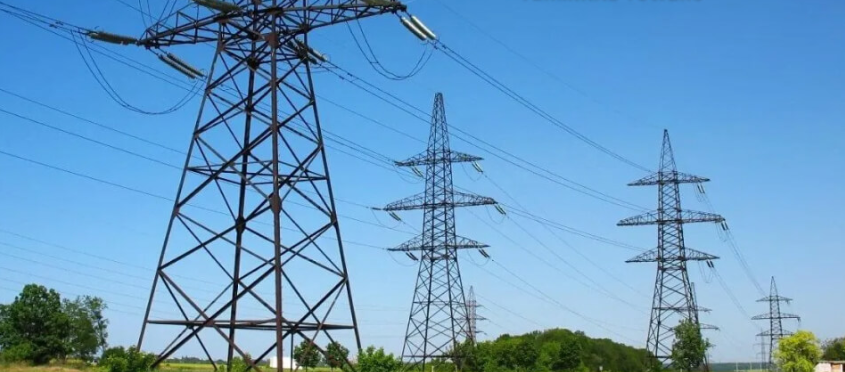
In April 2023, the Independent Planning Commission (IPC) granted SSD consent for the Bowdens Silver Mine, an open-cut silver, lead and zinc project located near Lue in the Central West. The approval covered the mine site and associated on-site works. Electrical power for the mine, however, was to be delivered via a 66 kV transmission line connecting the site to the existing grid. That transmission line was not included in the development application and was proposed to be assessed under a separate approval process at a later stage.
This separation became the focal point of subsequent judicial review proceedings. A local environmental group, Bingman Catchment Landcare Group Incorporated, challenged the validity of the SSD consent on the basis that the IPC had failed to consider the environmental impacts of infrastructure essential to the mine’s operation. The case ultimately required the NSW Court of Appeal to determine how far a consent authority’s obligation extends when assessing a “single proposed development” under the EP&A Act.
The Development Approval
The Bowdens Silver Mine was approved as SSD under Part 4 of the EP&A Act. As with other SSD projects, the IPC was required to consider the matters set out in s 4.15(1), including under s 4.15(1)(b) the likely impacts of the development, including environmental impacts on both the natural and built environment.
The transmission line was acknowledged during the assessment process as necessary for the mine to operate. However, it was treated as an off-site component to be assessed separately. The Environmental Impact Statement did not evaluate the transmission line’s environmental impacts, and the IPC’s reasons for decision did not address them.
Judicial Review Proceedings
Bingman Catchment Landcare Group commenced judicial review proceedings in the NSW Land and Environment Court, alleging that the IPC had committed jurisdictional error by failing to consider a mandatory relevant consideration. The challenge was directed solely at the legality of the decision-making process, not at the merits of the mine itself or its environmental desirability.
At first instance, the Land and Environment Court dismissed the challenge. It accepted that the transmission line was not part of the “single proposed development” for which consent was sought and therefore did not require assessment under s 4.15(1)(b) at the time the SSD consent was granted.
The applicant appealed to the NSW Court of Appeal.
Statutory Framework
Two provisions of the EP&A Act were central to the appeal.
Section 4.15(1)(b) requires a consent authority to take into account “the likely impacts of that development, including environmental impacts on both the natural and built environments”.
Section 4.38(4) addresses the concept of a “single proposed development” for SSD purposes and provides the statutory mechanism by which interdependent components of a project may be treated as one development for assessment and approval.
The interaction between these provisions framed the Court’s analysis.
Issues on Appeal
The principal issue was whether the IPC was required, as a matter of law, to consider the environmental impacts of the transmission line when determining the SSD application for the mine.
This required the Court to determine:
whether the transmission line formed part of the “single proposed development” for the purposes of the EP&A Act, and
whether the likely impacts of that infrastructure were mandatory considerations under s 4.15(1)(b).
Decision of the Court of Appeal
By majority, the Court of Appeal allowed the appeal and set aside the SSD consent.
White JA and Adamson JA held that the transmission line was integral to the mine’s operation. The mine could not function without an external electricity supply, and the only identified means of supplying that electricity was via the proposed transmission line. In those circumstances, the likely environmental impacts of the transmission line were impacts of the development itself.
The majority concluded that the IPC’s failure to consider those impacts constituted a failure to consider a mandatory relevant consideration. That failure amounted to jurisdictional error.
As a consequence, the development consent granted in 2023 was declared void and of no effect.
Dissent on Remedy
Price AJA dissented in part. While accepting that the IPC had erred in failing to consider the transmission line, his Honour took a different view on the appropriate remedy.
Rather than invalidating the consent entirely, Price AJA would have preferred a remedial approach that suspended the operation of the consent to allow for assessment of the transmission line through a separate approval process.
This divergence did not affect the outcome of the appeal but highlighted differing judicial approaches to remedies for procedural error in complex planning cases.
Professional Significance
The decision confirms that, in the context of SSD, consent authorities must assess the environmental impacts of all infrastructure that is essential to the functioning of the approved development, even if that infrastructure is physically separate or proposed to be approved later.
The case reinforces that judicial review of planning decisions focuses on legality, not merit. An approval may be set aside even where the project’s economic or policy rationale is not in dispute, if mandatory statutory obligations are not met.
For developers and planning authorities, the decision underscores the legal risk of segmenting project components in a manner that excludes integral infrastructure from environmental assessment. For legal practitioners, it provides a clear example of how jurisdictional error may arise from omissions in SSD assessment processes.
Professional Significance
This decision establishes that failure to assess integral infrastructure can invalidate SSD approvals under the EP&A Act. It clarifies the scope of mandatory environmental considerations under s 4.15(1)(b), affirms the centrality of the “single proposed development” concept, and demonstrates the limits of administrative flexibility in staging project approvals where essential components are concerned.